
Module: Tactical Combat
This module covers how to play out a battle tactically; useful when the nuance of a fight is important for the outcome. This module works well on a grid-based map.
Important! Combat in MythWatch is seldom lethal, but always dangerous. When enemies have lost all their Resolve, they surrender or flee. When players lose their Resolve, they may choose to continue fighting. But doing so risks your character!
What you can do in a turn
In combat, a lot happens in a short amount of time. That’s why combat is played in turns. Once a fight begins, the Guide will ask everyone to roll to determine the turn order. During your turn, you have 3 Action Points. You can spend them on three different types of actions: movement, attacking, and Stunts.
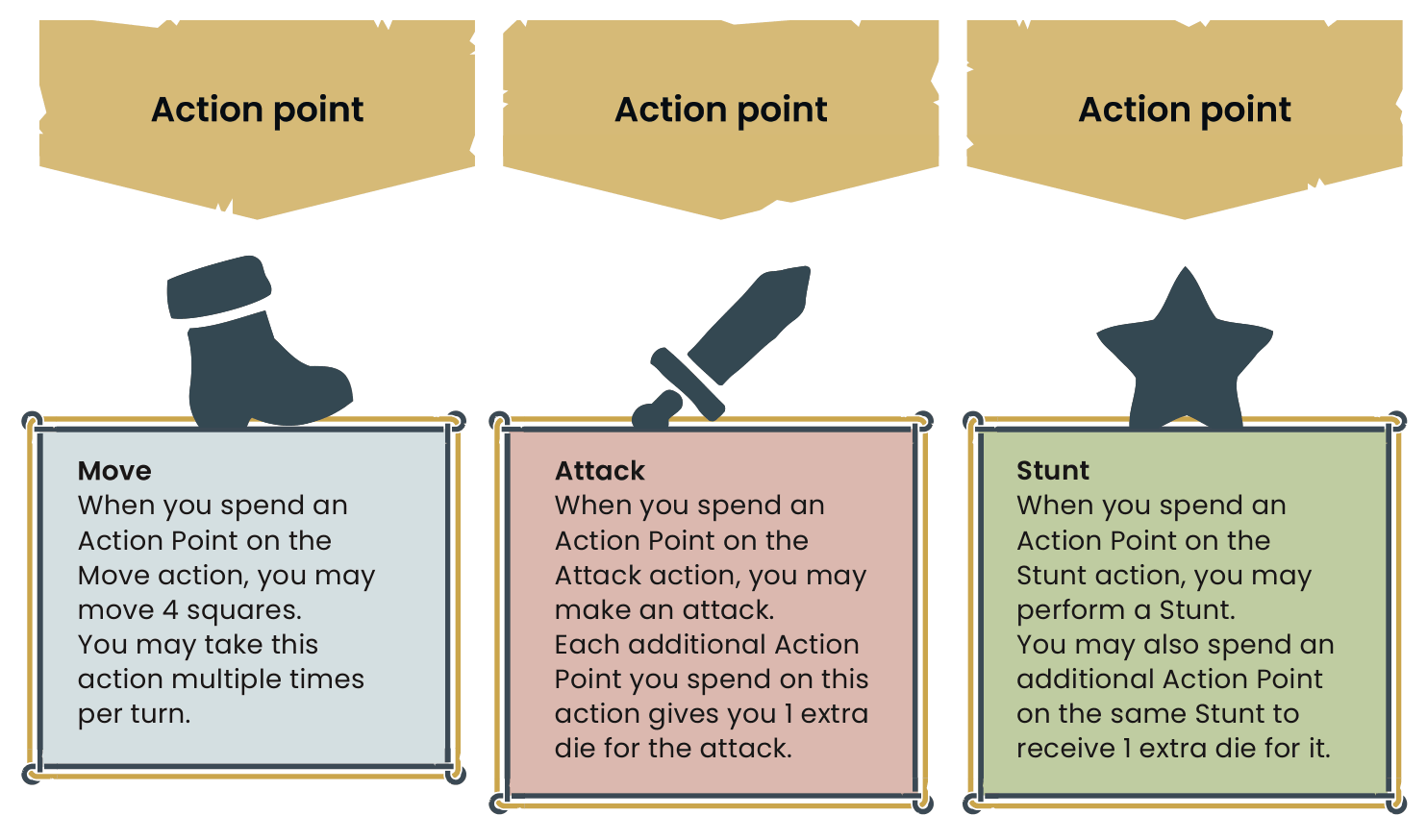
Move action
You may run up to 4 squares. These squares must be connected, and you may move horizontally, vertically, or diagonally. You may not move through a square that is already occupied by something or someone. Any unused squares when you spend your next Action Point are lost. To jump or climb as part of a Move action, you may be required to also spend an Action Point on a Stunt action.
Attack action
An attack is done following these steps:
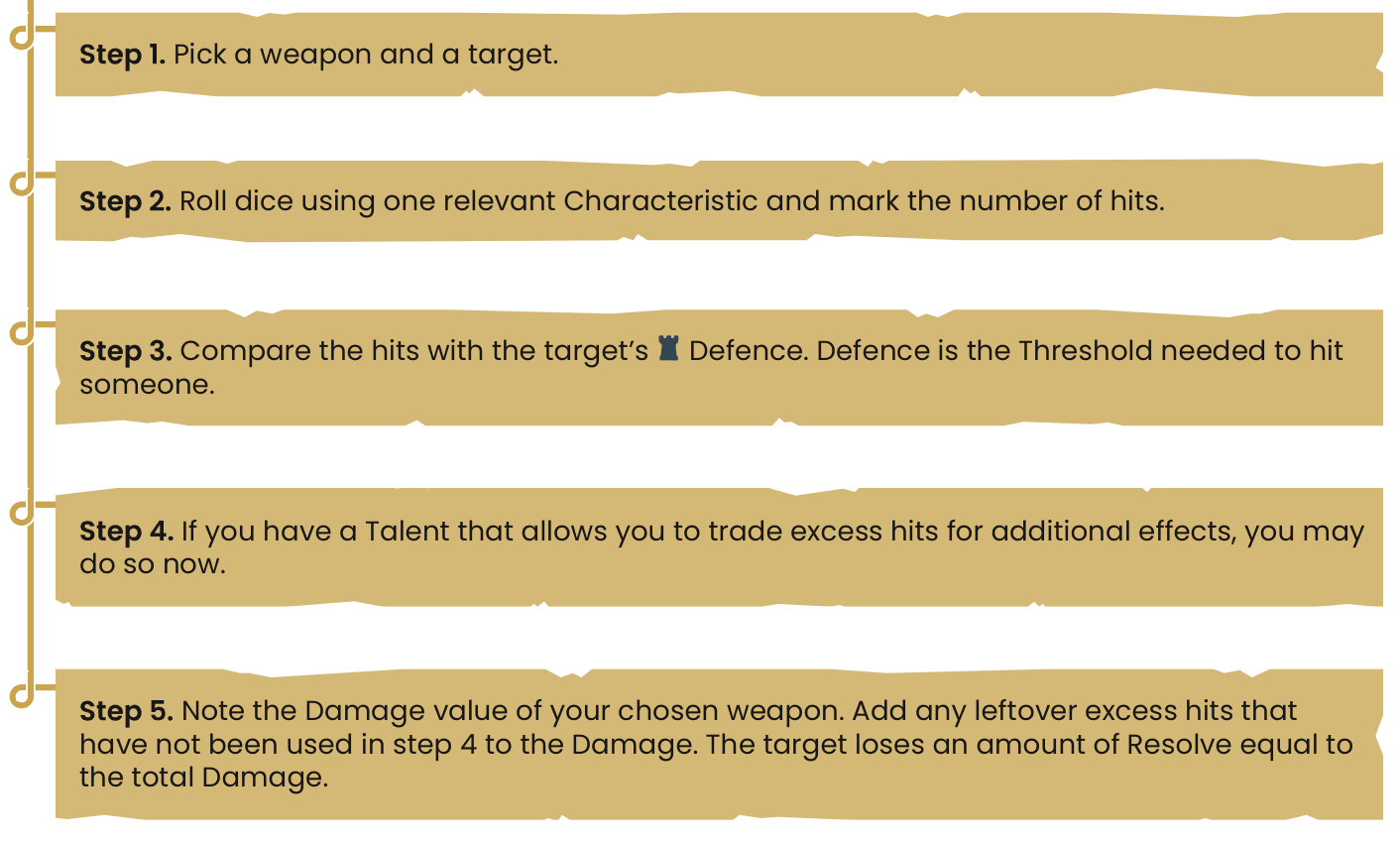
Stunt action
Stunts in combat are not much different from Stunts outside of combat. You can use your equipment or the environment to your advantage. For example, you might jump from one boat to another, throw sand into someone's eyes, or tip over a barrel of water into the path of your enemies. Stunts never deal damage directly; otherwise, they would count as an Attack action instead. However, the outcome of a Stunt can still indirectly cause Resolve loss, for example by pushing an enemy off a bridge.
Other actions
You may want to do something that doesn’t require a roll, but for which the Guide still asks you to spend an Action Point. Small actions, such as opening or closing a door, usually do not cost Action Points and can be done for free. Discuss with your Guide when you want to do something not covered by the 3 action types.
Resolve
Resolve works the same as in the core rules, with a few additions. Two new conditions are introduced: Worn and Broken. You are Worn when you have lost half of your Resolve.
You are Broken when your Resolve reaches 0. Unlike in the core rules, you remain at 0 Resolve until you recover it by spending an Action Point.
Resolve represents your physical and mental condition. When you lose Resolve, it reflects both the physical and mental toll of your experiences, and not necessarily physical injuries.
Worn
When you have half or less of your Resolve remaining, you gain the Worn Setback. During combat, you only have 2 Action Points per turn instead of the normal 3. You remain Worn until your Resolve is restored to 6 or higher. If this happens during your turn, you immediately regain your 3rd Action Point and may still use it during that turn.
Whenever you are Broken, you are also Worn.
Broken
When enemies reach 0 Resolve, they gain a Major Setback and surrender or flee. As a Mythmaker, when you reach 0 Resolve you are Broken and may still remain part of the fight. When you receive the Broken card, the following happens:
- You receive a Major Setback as normal.
- While you are Broken, you may not take the Attack action. You do gain access to a new type of action: Recover (see below).
- Enemies will consider you to have surrendered, unless your Guide determines that you are still an active threat to them.
You keep the Broken Setback until your Resolve is restored by 1 or more. At the end of a combat, you can also Recover in peace. Remember that the Major Setback remains even when you are no longer Broken!
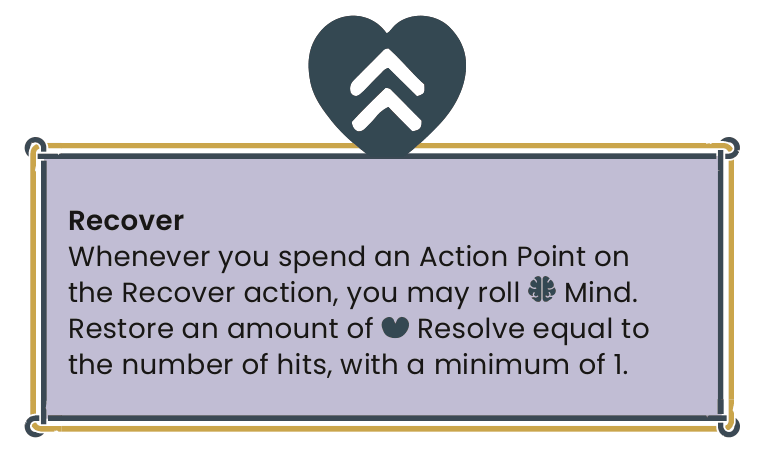
Recover
With the Recover action, you can restore Resolve. This is risky for three reasons:
- Your enemy will consider you a threat again, meaning they may attack you;
- If the enemy attacks you again and you receive the Broken card once more, your allies will lose 2 Resolve again;
- If you receive the Broken card again, you also gain a second Major Setback, meaning the end of your character’s story.
So, always consider with your allies whether you want to keep fighting or whether the group would be better off surrendering or fleeing!
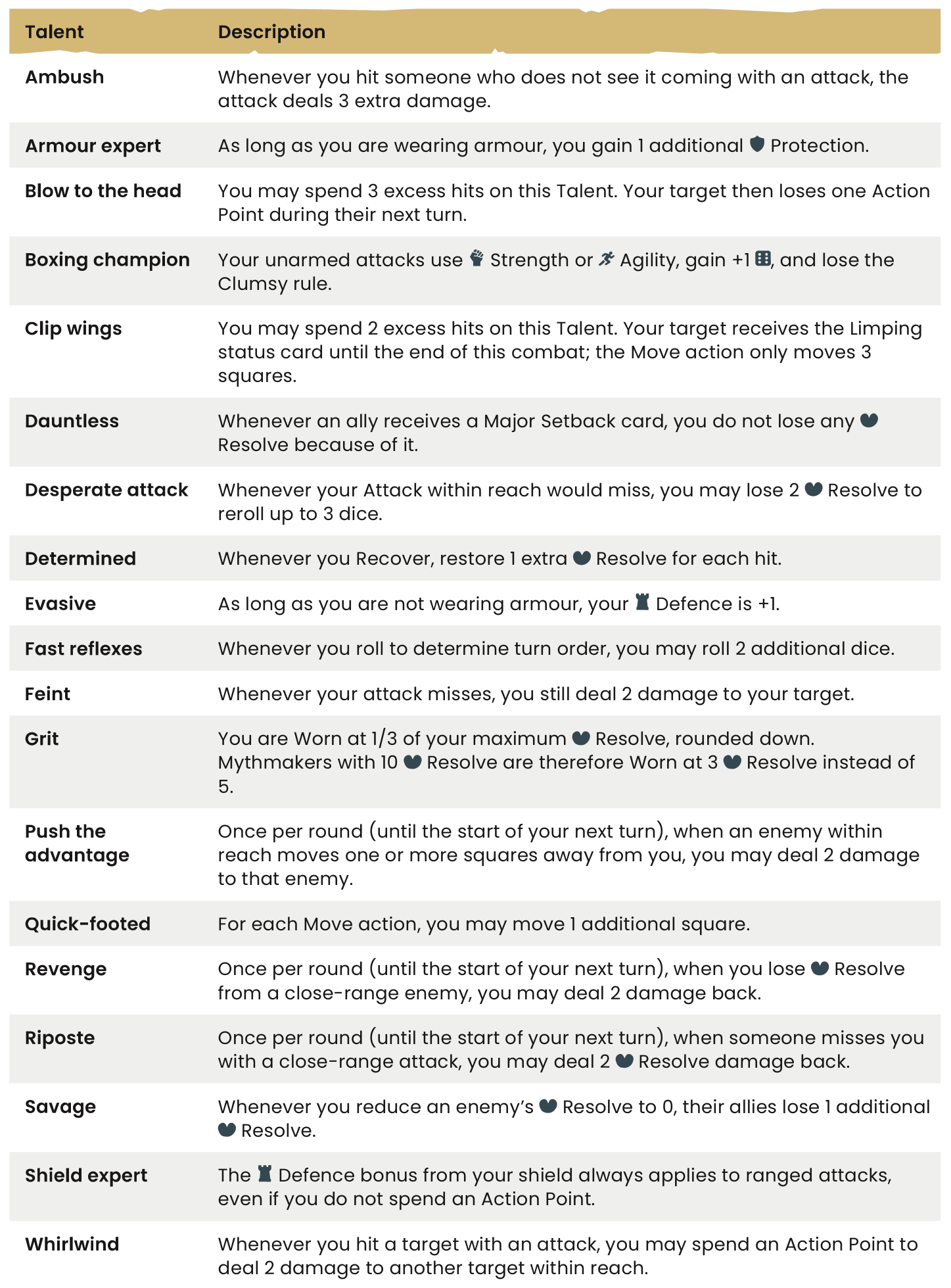
Tactical Talents
This module introduces new Talents that are entirely focused on tactical combat.
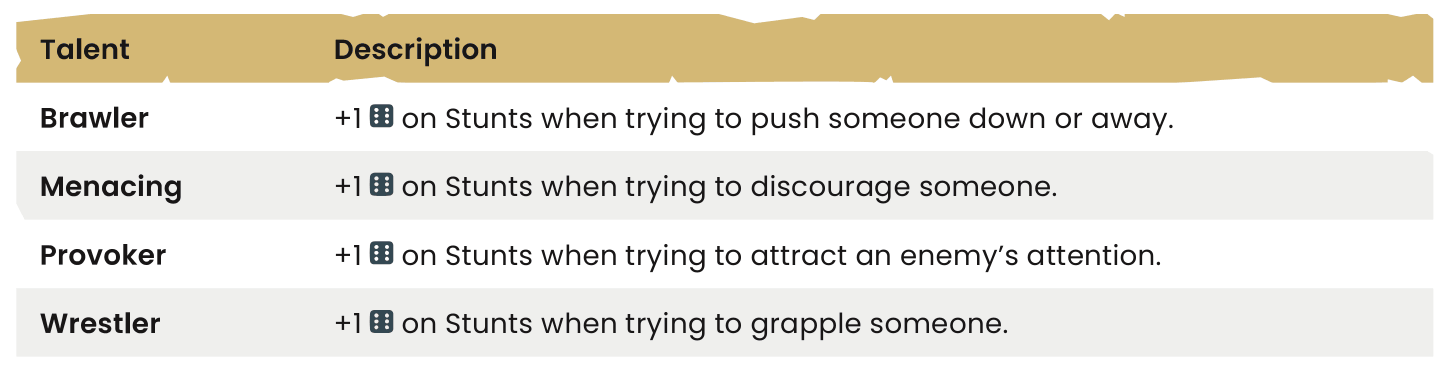
Tactical Expert Talents
Tactical equipment
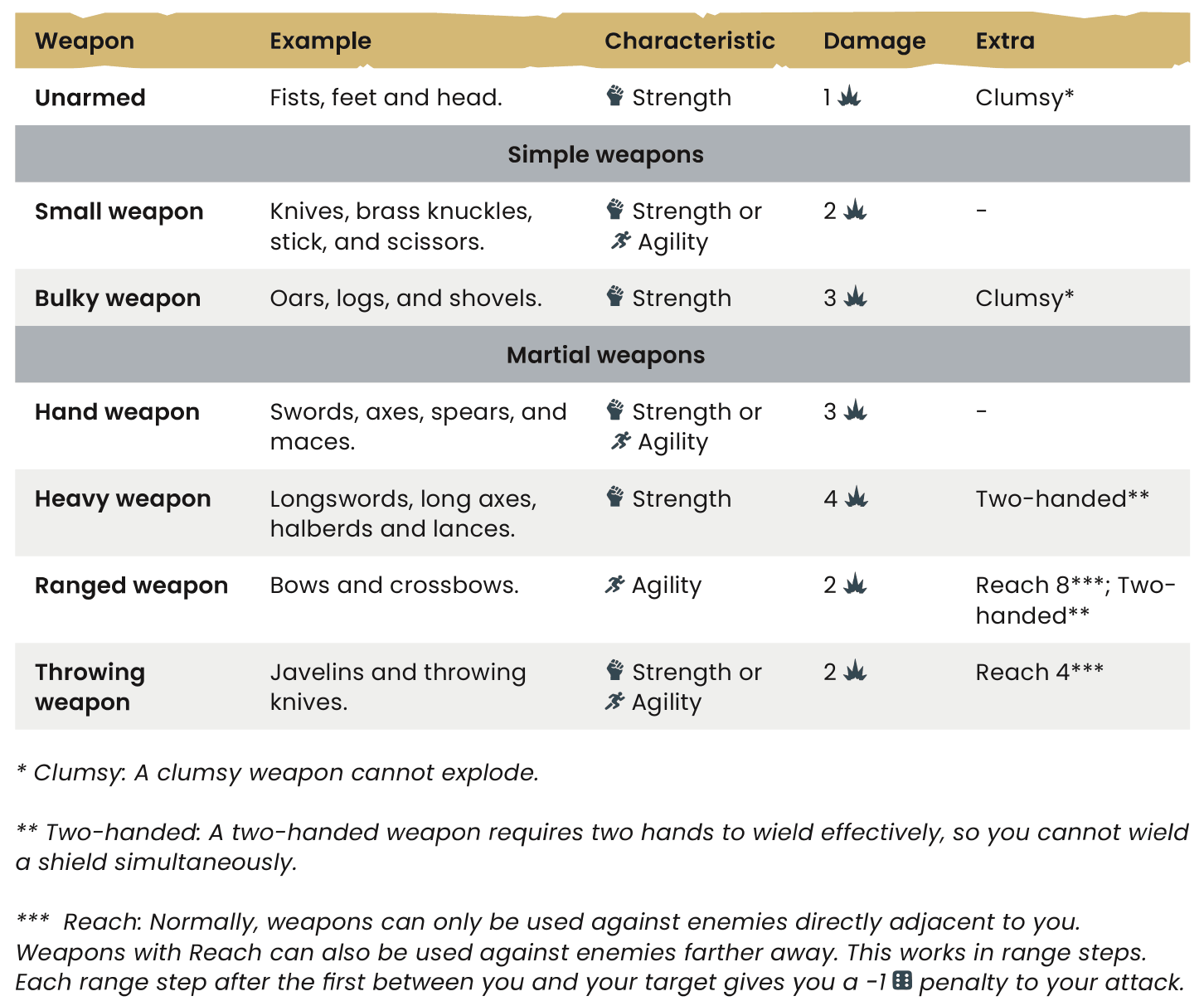
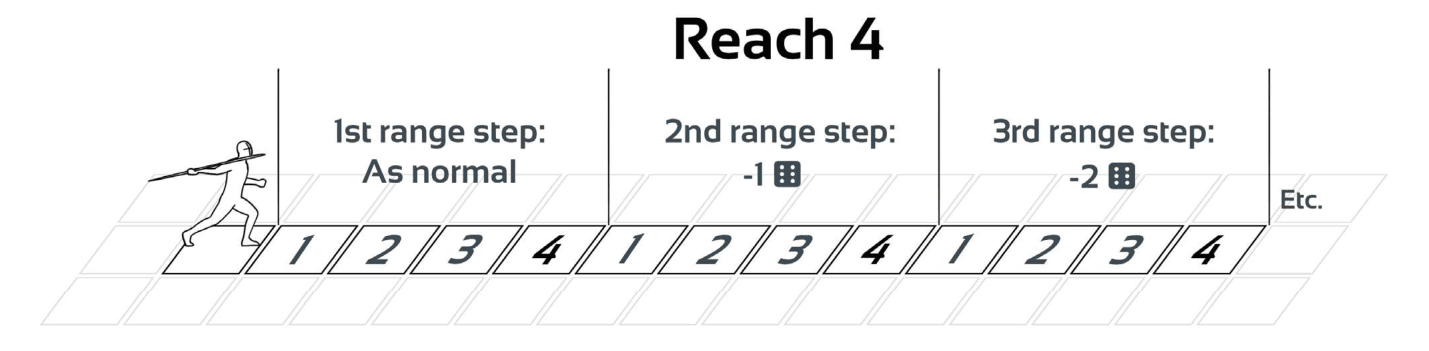
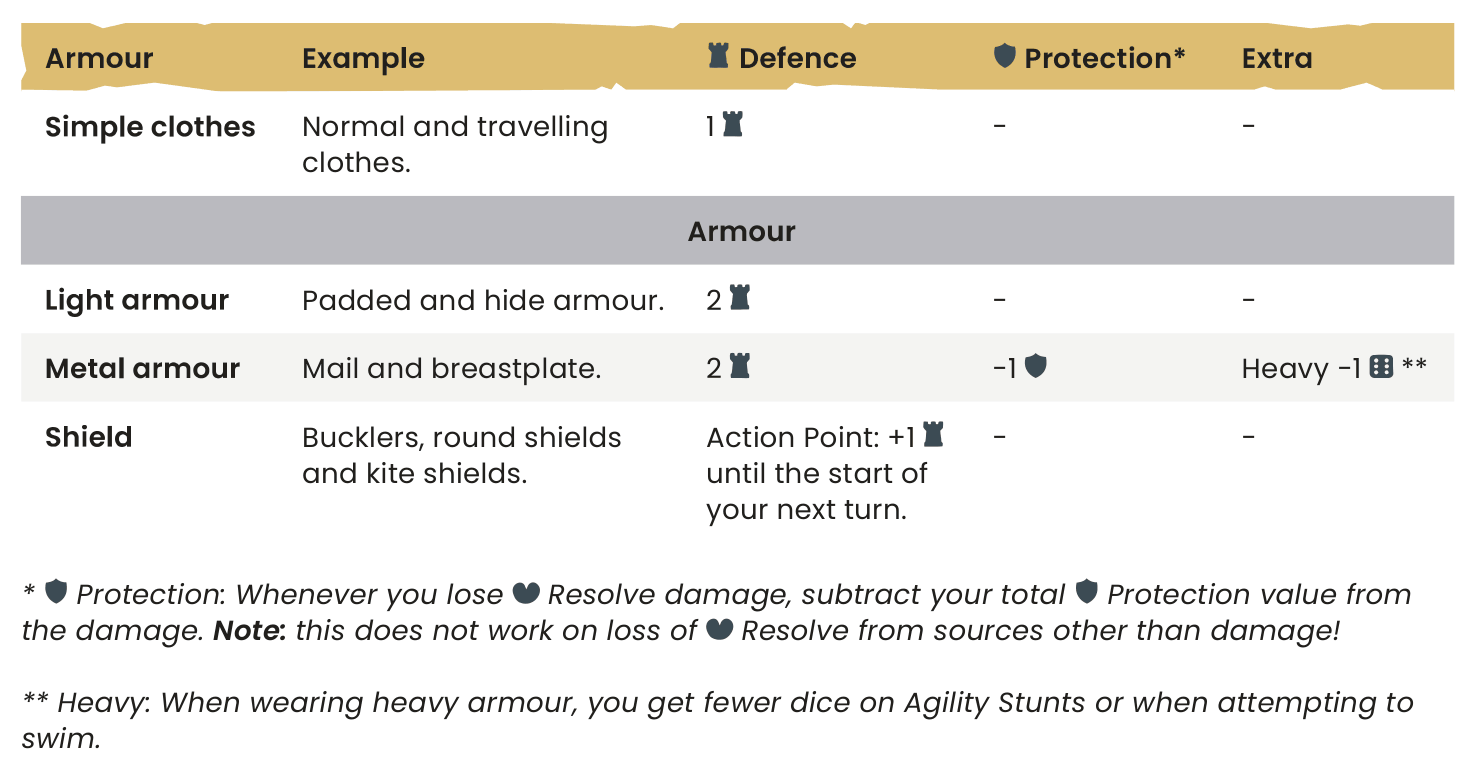
Weapons and armour work differently in this module than other equipment; Simple and Martial weapons are further divided into categories, each with their own damage value and Characteristic. Armour is divided based on Defence and Protection. The list is not exhaustive; if you have an idea for your Mythmaker that doesn’t fit one of these items, discuss it with your group. Your Guide is free to create a custom type of weapon or armour for you.
Weapons
Weapons are divided into Simple weapons and Martial weapons. Everyone has access to Simple weapons. Only with the proper training (see the Trained Warrior Talent) can you properly use Martial weapons and benefit from their advantages.
Armour
Everyone has access to Simple clothing. Only with the proper training (see the Trained Warrior Talent) can you properly use armour or a shield and benefit from their advantages. This affects your Defence, which is the Threshold to hit you.
Glossary: Tactical Combat
- Action Point: One of three points you can spend during each of your turns.
- Attack action: A type of action you can use to attack something or someone.
- Broken: The state of having 0 Resolve left. Not only are you also Worn, you lose access to the attack action, but you do get access to the Recover action.
- Damage: The loss of Resolve caused by weapons or other combat situations.
- Defence: The Threshold that needs to be met or beaten in order to hit you. This Threshold is affected by the armour you wear.
- Move action: A type of action used to move your character an amount of squares.
- Recover action: A type of action you only have access to when you are Broken. Do a Mind Stunt and heal Resolve equal to the hits, with a minimum of 1.
- Worn: The state of having lost half or more of your Resolve. Until you lose your Worn Status, you lose one of your three Action Points.