
Panther Cauri shell
Merchandise
“Then how about this? This shell is from faraway warm lands, with seas the like you’ve never seen before! A gift from the gods, no doubt about it. Very valuable.”
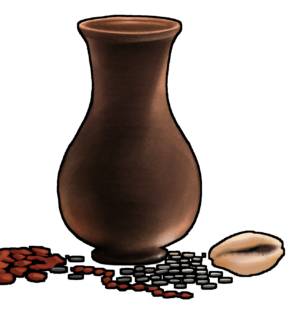
Around the year 700 CE, money could buy a great deal, although the heyday of Domburg, Dorestad and the other trading centres was yet to come. Both mundane equipment and luxury items for the elite sometimes came from far away. For example, a small jug made of a copper alloy was found that had been manufactured in northern Italy, and this panther-shaped cowrie shell was brought to Frisia from the Red Sea region during that period. Gemstones, such as the red almandine, came from even further away. Goldsmiths used these to make jewellery. In other words, traders came from far!
This shell in particular is rather unusual, not because of its origin but because it was found on the forehead of a person in a grave. This gives us cause to speculate about a possible ritual role the shell may have played. After all, later accounts tell of a mythical sea god who gives Redbad a sword. Moreover, water played an important role in the daily lives of the Frisians. A great deal of trade came via boats, but the mounds were, of course, built for a reason. Does this shell symbolise a special (supernatural) connection with the water? Or perhaps with a sea god? Or was this person believed to have possessed magical powers?
MythWatch
In MythWatch, shells like these are useful for trading or to open the right doors. On the other hand, the speculation about supernatural or even divine properties is an interesting way to make such an object feel even more special. Perhaps a Mythmaker could spend a fate die to manipulate the water around them, for example by making a ship sail faster or protecting the group from large waves. Or perhaps it grants the Mythmaker the ‘wild sight’ gift talent, but only with aquatic animals.