
Oda
Old dog
“Here Oda! Good girl. Come along now, it’s getting dark. Let’s go home.”
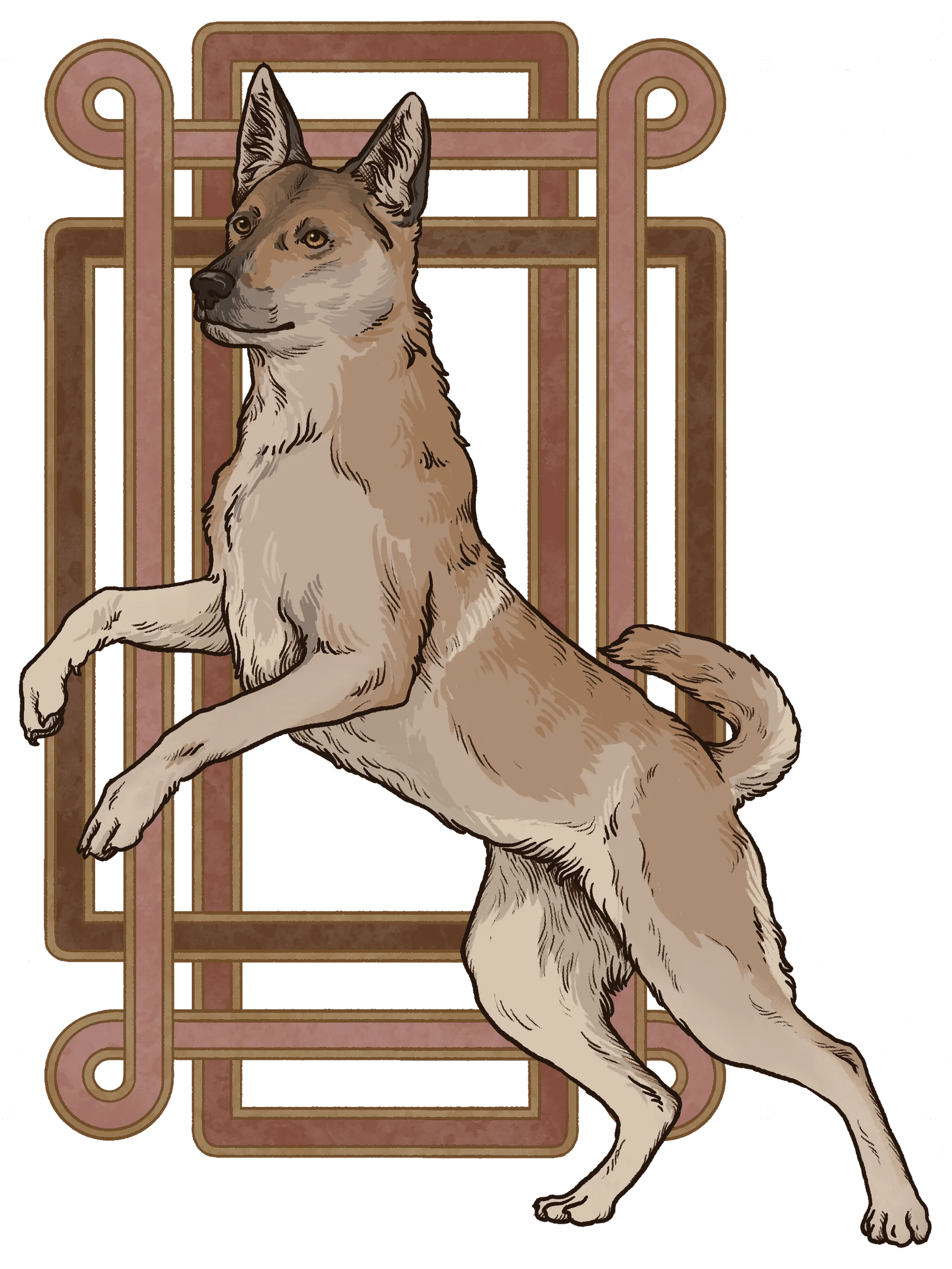
This old female dog, at least ten years old, was buried in the Burmania mound at Ferwert, in Oostergo. Her remains were unearthed in 1910, complete with some fur.
Dogs must have played an important role in Frisian society. The Lex Frisionum lists five different types of dogs, each with their own monetary worth. The highest fine was reserved for killing a barmbraccus, which was probably a spaniel-like hunting dog that also served as a lap dog. Next on monetary value was a dog capable of killing wolves, followed by one that could wound wolves. Further down the scale was the dog that simply guarded livestock, a role that dogs fulfil in many cultures. The lowest amount was for ‘a dog that does nothing and merely stays in or around the house’. Either way, hurting or killing any type of dog demands compensation.
This classification into five types of dog reflects the high value the Frisians placed on their dogs. This is evident not only from legislation; in early medieval burial grounds and settlements, archaeologists also occasionally uncover dog graves. These invariably contain large dogs, often elderly and sometimes with greyhound-like features.
MythWatch
In a game of MythWatch dogs could play an important role as well. In addition to the shepherd origin’s friendly dog companion, dogs can be found in and around other people’s houses. Perhaps a nobleman’s large and imposing dogs are making conversation with him a little more unnerving. Or perhaps a dog comes asking the players for help, because its owner is in trouble. You could even speculate a little deeper and bridge the connection between dogs and the afterlife; what is death’s messenger is a dog?