Safety
Roleplaying games are fun and educational, but they can also take you out of your comfort zone. That can be exciting, but also embarrassing. It is therefore important that everyone feels safe at the table. Examples of what can make a table unsafe include when players:
- Do not feel comfortable being themselves
- Have a sense of humour that does not fit the group
- Are (correctly or mistakenly) accused of cheating
- Are simply not feeling their best
Responsibility for safety lies with everyone at the table. It can help to align everyone’s expectations before playing. The Guide has an important role as game leader and referee in this.
The most important thing is that not only the players but also the Guide can enjoy the story. Agree together that it is okay to make mistakes, and tell the players if you are unsure about something. You can always pick up the rulebook or this website again and look up the rules. Together, you will create a wonderful experience!
Tips for a safe game environment
There are a few ways to help keep the table safe. Here we share a number of commonly used options and tips to guide this process:
Session 0
Session 0 is a moment where all players come together before the game begins. During a session 0, the group can discuss expectations, and the Guide can explain the tone and atmosphere of the story. It is also a good moment to share if there are topics you would prefer not to see in the game.
History sometimes contains heavy or difficult themes, and not everyone feels comfortable with everything. Agree in advance on what you do and do not want to encounter in the story.
A Session 0 does not need to be long. A few minutes before playing or during character creation can already be enough. The most important thing is that everyone is given space to speak and share their preferences.
X-Card
You cannot always predict which topics will be sensitive. The X-card method (by John Stavropoulos) can help with this.
Place a card within reach of everyone at the table. If a player starts to feel uncomfortable with an element in the story, they can tap the card. This signals that the topic should be dropped without discussion and the story should move in a different direction.
The Guide can introduce the X-card, but a player may also ask for it themselves. Remember: your sense of safety is always more important than the game.
Taking a break
Whenever things don’t feel right for a moment, you can always pause the game. Ask for a short break, for example to get a drink or step away for a moment. Take the time you need to calm down, and rejoin when you’re ready.
Check-out
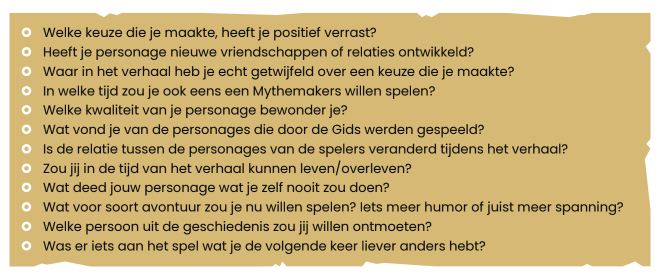
When the game is over, it can be a good idea to take a moment to discuss the game. This is the perfect time for players to share what they enjoyed about the story and what the events meant to them.
Sometimes the debrief happens naturally, but it can also be helpful to have some questions prepared. You can use one or more from the list of questions below: