
Fositesland
Did Redbad really have a sacred, pagan island? That is quite possible. We know that North Sea kings like him acted as leaders of rituals and patrons of sanctuaries. And because the missionary Willibrord ended up there on his way back from Denmark, most evidence points to the Danish island of Helgoland, which means ‘holy land’.
The biography of the missionary Liudger also mentions the island dedicated to the god Fosite, some 100 years later. It was shrouded in a ‘thick, black mist’, but Liudger ‘brought light’ to it. There, he reportedly destroyed the pagan shrines, baptised the local people and built a Christian church.
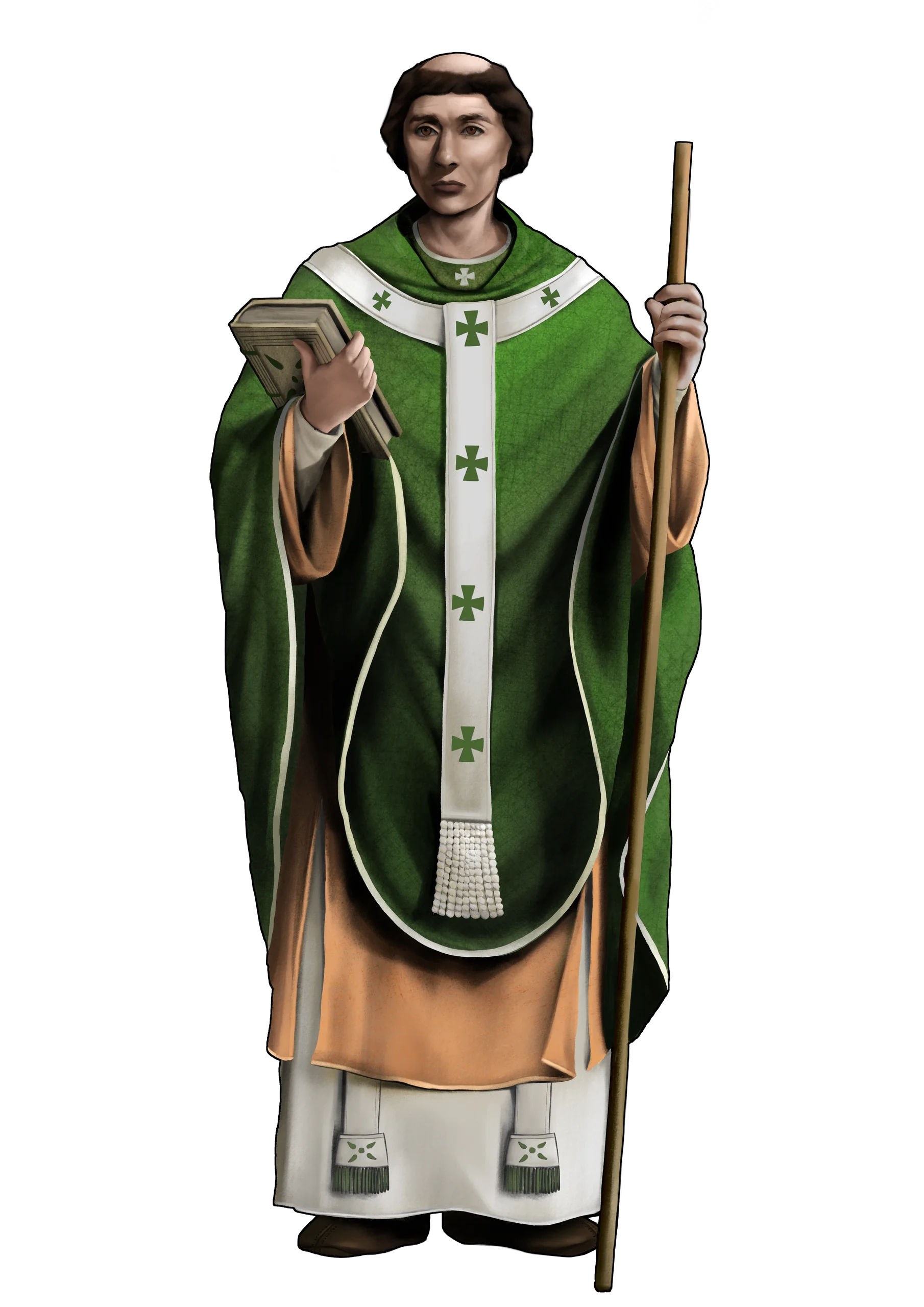
The accounts of Archbishop Willibrord describes how, around 700 CE , a violent storm swept him ashore on Fositesland: Redbad’s holy island. Willibrord knew that the animals and springs on the island were sacred to the Frisians, but ‘he attached little importance to the foolish religion of that place or the fierce nature of its ruler’. He and his entourage desecrated the spring and slaughtered the animals. Through his actions, he sought to prove that the ‘pagan’ faith was heretical.
King Redbad was furious. For three days, three times per day, Redbad had lots cast. According to Alcuin, the author of the ‘Life of Willibrord’, the lot eventually fell on one member of the party, who was subsequently put to death. Willibrord is said to have made one last attempt to convert Redbad, but the king sent the preacher and his companions back to Pepin. From then on, Willibrord would confine his missionary work to areas that were more firmly under Frankish influence.