
Fibula of Wijnaldum
Iconic Frisian fibula
“This fibula was my mother’s. She told me: who wears this, carries the observant eyes of Hei and Minke.”
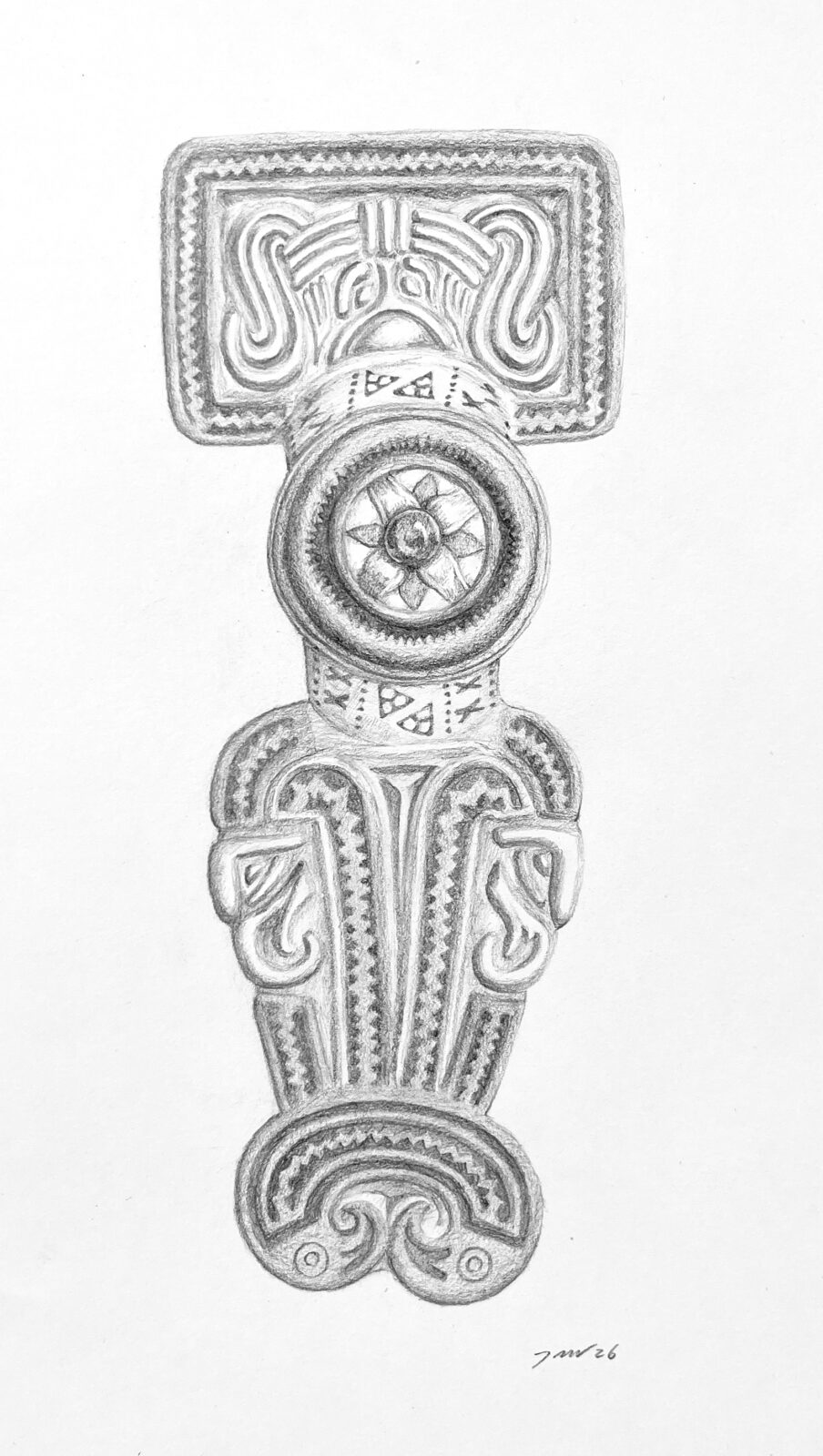
You could write a book about the Wijnaldum fibula, and it would read just like a gripping thriller. The famous cloak pin, dating around 625 CE, is an icon of Frisian archaeology. In 1953, a farmhand discovered a large piece of gold set with red stones whilst digging a drainage ditch on the Tjitsma mound. The Fries Museum acquired the artefact and had it restored at the British Museum in London.
This fibula, like many, shows two stylised birds of prey on the left and right. These are probably ravens and were associated with the worship of Woden, who is often depicted accompanied by two ravens. In collaboration with the Fryske Akademy, these ravens have been given Frisian names: Hei and Minke.
It was initially thought that the Wijnaldum brooch might have belonged to a Frisian king. However, new insights suggesting that fibulae were worn primarily by women led to the conclusion that the piece of jewellery did not belong to a Frisian king, but rather to his wife, the queen or a priestess. Or perhaps Redbad’s daughter: Theudesinde.
The website of the Fries Museum show very clearly how the figures on the fibula actually depict a snake or a raven.
MythWatch
In MythWatch, fibulae can serve as valuable objects. Especially when worn by women, they could command a great deal of respect. But their connection to the gods and the ravens also opens up the possibility of mythical or magical properties. Hei and Minke are fictional names for Woden’s ravens, but perhaps a player could spend a Fate die to summon these two friendly ravens and ask them a question. Since ravens cannot speak, their answers would be limited.
The value of such an object also creates the possibility for an adventure built entirely around the loss or theft of a fibula. Who would want such a piece of jewellery? And why? Or does the thief have another reason for stealing an icon of Frisian culture?