
Mythological swords
“This is Asbran: Redbad’s lost sword… You know what this means: it is time for our king to awaken once more.”
The swords displayed in the museum, golden objects, sometimes adorned with precious stones, are truly impressive. But for Redbad’s contemporaries, the ‘story’ behind such an object was at least as important as the material itself. The most precious weapons and jewellery had their own history, whereby the status of their previous owners was reflected upon the recipient. A weapon that once belonged to a warrior still celebrated in songs would have been a highly coveted possession. The most famous swords were recognisable by their unique hilts. They were even given their own names, perhaps even a personaltiy of their own. One such sword is Asbran, Redbad's own blade given to him by a god, so say the legends.
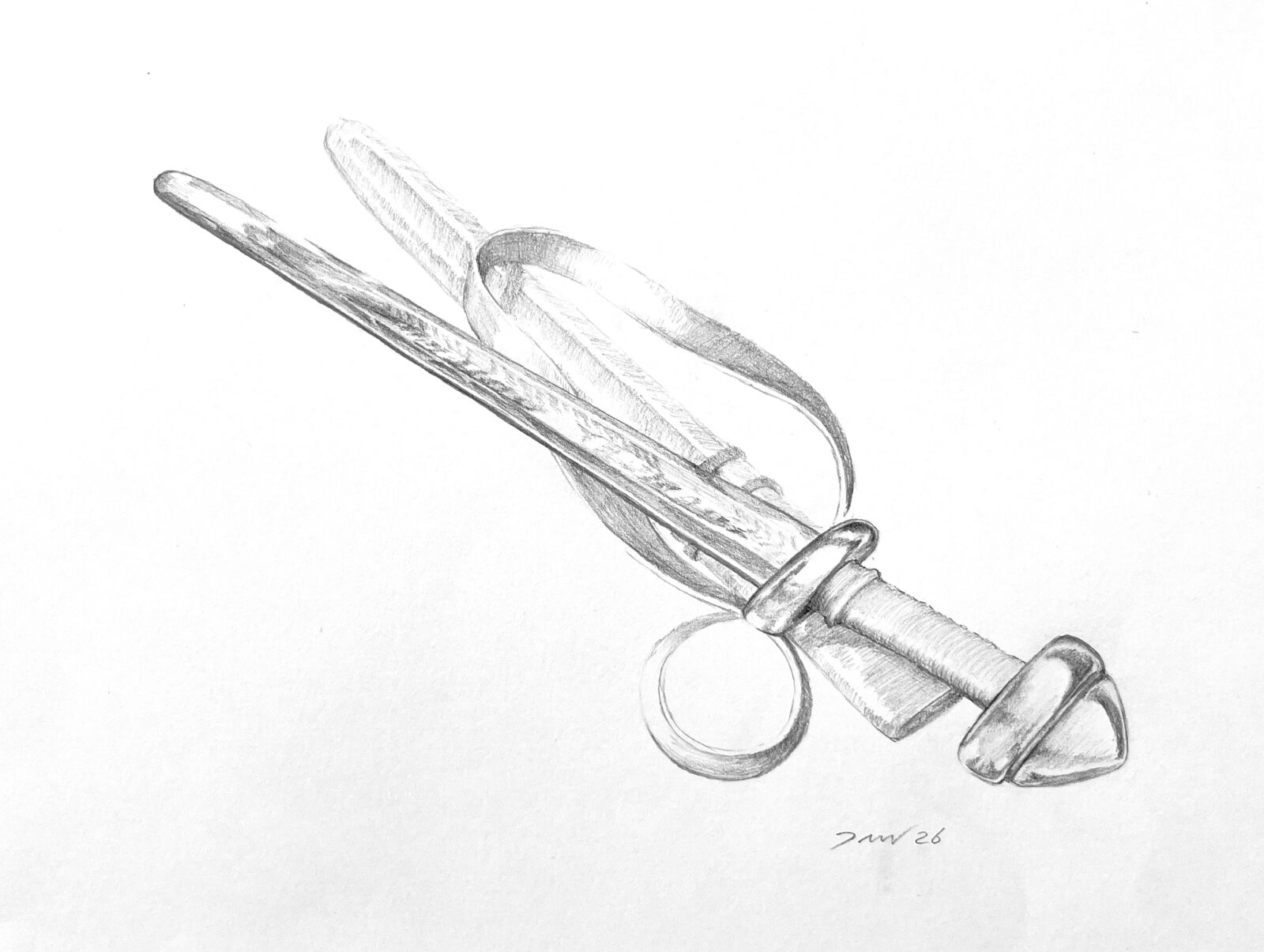
The tale: Redbad and the Miracle on the Rekere. When Redbad was dividing the spoils of his victory over Charles Martel (716 CE) in Opperdoes near Medemblik, he chose a fine Frankish sword for himself. On his way home, the god of the sea emerged from the Rekere (a river), transformed from a black swan. The sea god exchanged the Frankish sword for the sword Asbran, belonging to ‘he who rules over all mankind’, for Asbran was intended for ‘the one who will defend the people when the day dawns that the people are reduced to slavery’. After Redbad’s death (719 CE), the sword had to be cast into the sea so that it could return to the sea god. Then, the black swan, accompanied by six white ones, flew to the North Sea. According to a similar legend, Arthur’s sword Excalibur was also cast into the water after his death. One of many remarkable similarities.
MythWatch
MythWatch is a game about myths. What could be more adventurous to explore than mythical swords? Perhaps Redbad’s sword has been found, and people believe this means that their king will rise again. Players might even discover swords of their own, which they can use on their adventures or preserve in the Archive.
People also believed that swords had personalities of their own. Perhaps players can sense emotions when they hold or wield a sword. They might even possess mythical or magical properties. A bloodthirsty sword, for example, could grant an extra die in combat, but cause the wielder to strike a fellow player if the Threshold is not reached.