
Sceatta treasure
“You have stolen from me. That is an injustice that will cost you either your honour or your money!”
Researchers studying these coin types had already noted something striking at the start of this century: the first intensive phase of sceatta coinage on both sides of the North Sea ran from 680 CE to 715 CE. These dates correspond closely with the period during which Redbad was in power.
The designs on these coins varied greatly, but one aspect of these new silver coins was entirely uniform: their weight. Each sceatta weighed 1.3 grams. This was due to the Roman coinage system from which these coins were derived. The Roman gold solidus weighed 3.9 grams, and three tremisses fitted into one such solidus. A gold tremissis therefore weighed 1.3 grams. The Merovingian Franks were still minting these gold coins at the beginning of the seventh century, including at Dorestad, but gold gradually became scarcer in this part of Europe. Consequently, these gold tremisses contained an increasing proportion of silver. Given this situation, the switch to a wholly silver currency, the sceatta, is understandable. Twelve of these silver coins were worth as much as one gold tremissis.
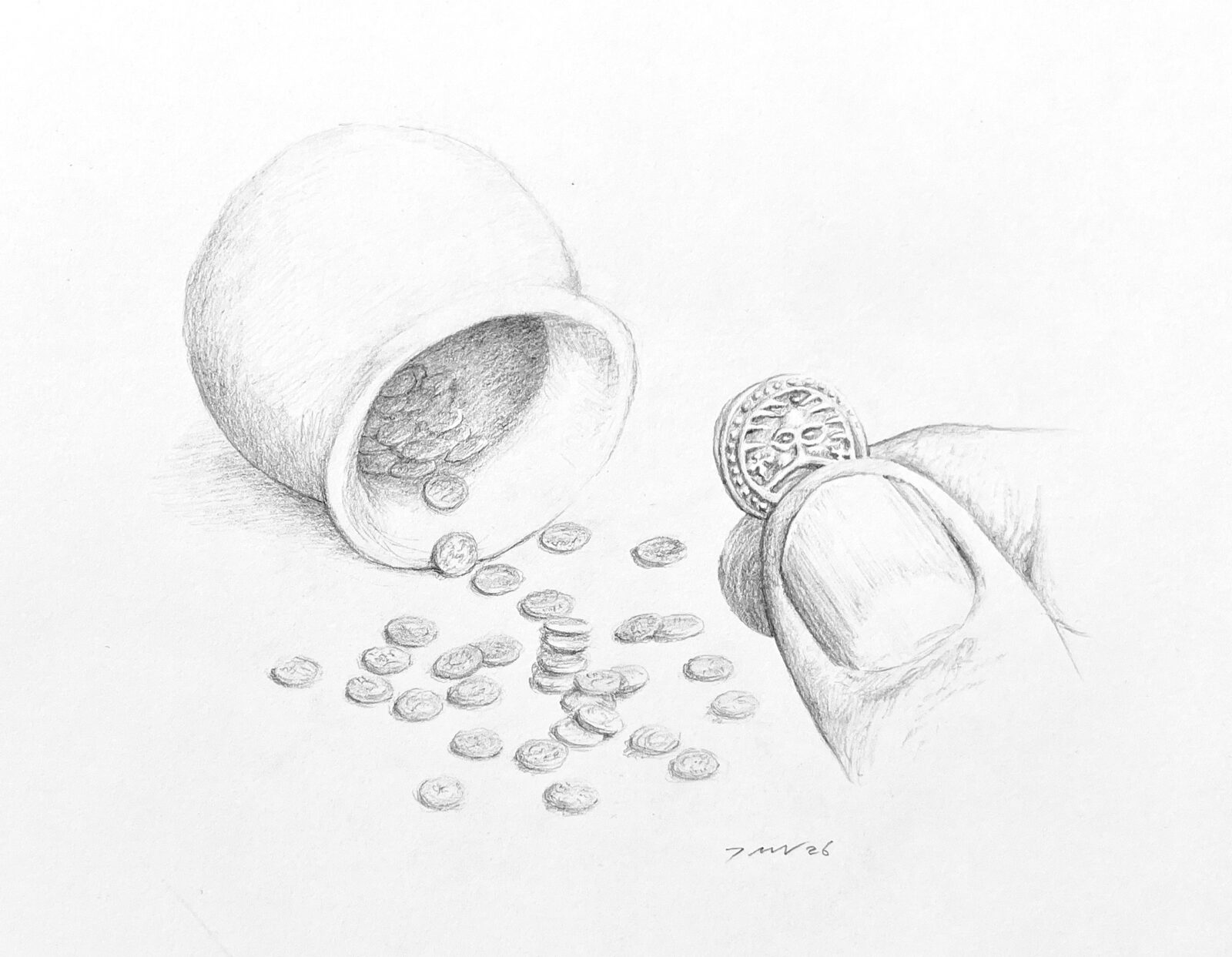
Finds made using metal detectors have provided many new insights into the distribution of sceattas. They are found in great numbers in the former trading centres, but individual coins also turn up far beyond these areas. In fact, they are found wherever people lived at that time. This means it must have also been common for ‘ordinary’ Frisians to use money in their transactions.
But a coin had more than just economic value. It was also the means by which Old Frisian law quantified the harm a person had suffered as a result of a crime. Detailed registers of fines meticulously recorded the compensation a person was to receive for specific injuries or other harm. Everything was expressed in monetary terms. There was only one type of offence for which a person could not pay their way out of: sacrilege. Anyone who committed a crime against the gods could not buy their way out with money, but lost their life.
MythWatch
Although Mythmakers in the game MythWatch do not typically get money in their Mythwatch kit, they can of course still find money along the way. Currency varies greatly depending on the time period and location, which could be an interesting detail to highlight during a game session. A treasure hoard full of sceattas could prove very useful to the players. Or perhaps there is a fellow Mythmaker in the Archive who collects coins from every era; something the players could help them with.