
The gods
It is not easy to piece together a complete picture of the Frisian pantheon. Ironically, most of what we know can be found in Christian sources. But these, of course, present a very negatively biased account of what the ‘pagans’ believed. Christians regarded their religion as superstition and Woden was often likened to the devil himself.
The clearest remnant of the Frisian pantheon is the names of the days of the week. Wednesday is the day of Woden, and Thursday (Thunresdei) the day of Thuner. Friday may refer to a goddess called Fria. Tuesday, too, probably originated as a reference to a god, as was the case in the regions surrounding Frisia, but we lack information in that specific case. The most important Frisian gods were Woden, Thuner, Fosite, Ing, Ti(w) and probably also goddesses such as Fria. We know the most about Woden and Thuner, thanks to archeological finds.
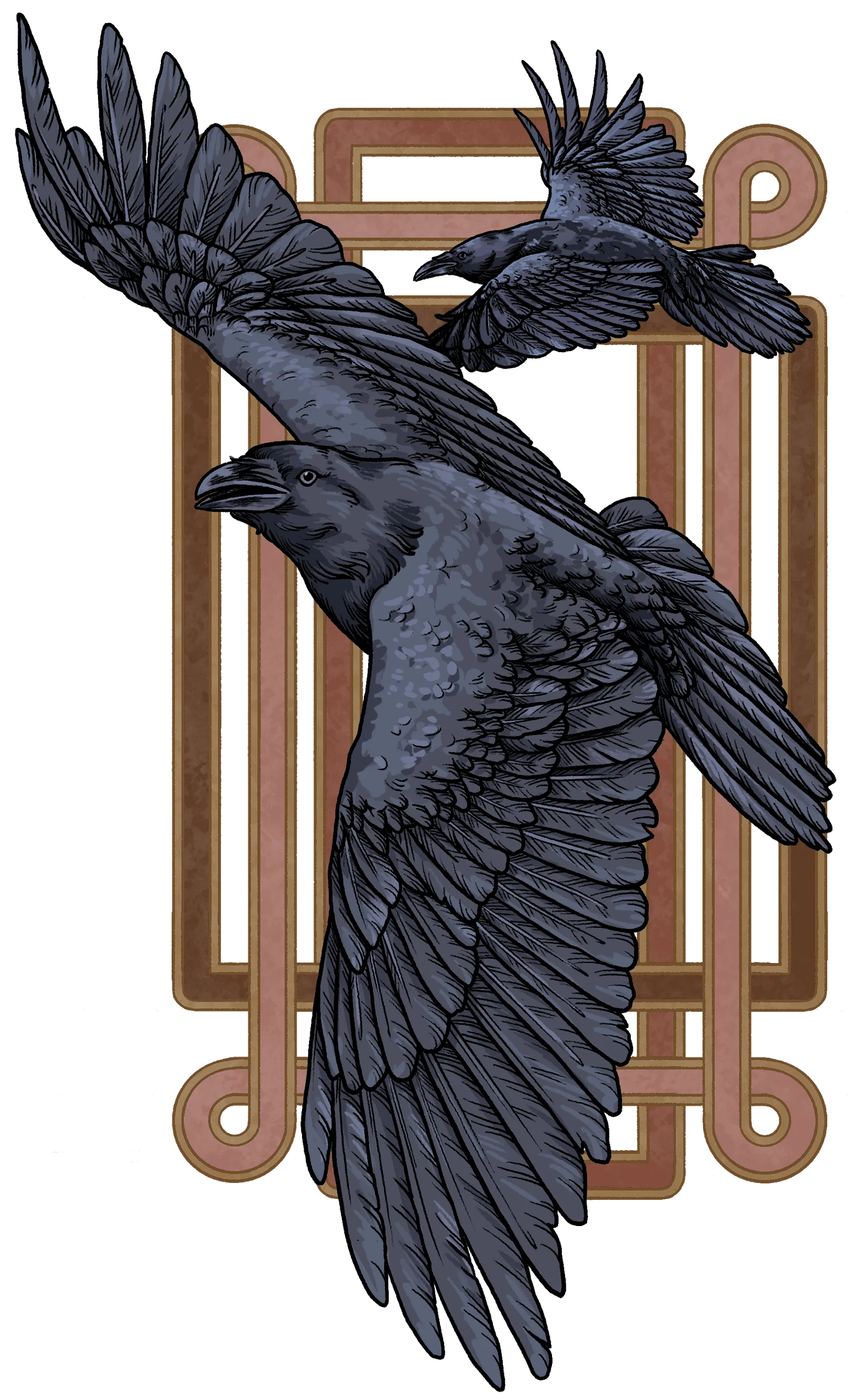
The extent to which Woden was present in the lives of the people of Frisia is evident from the archaeological finds dating from Redbad’s time. Many of these objects feature an often stylized image of a man’s face with a bird on either side. Woden is the god most frequently mentioned in Christian sources, and the god from whom several kings liked to claim descent. We do not know what characteristics were attributed to him, but in the other North Sea traditions, Woden/Odin is the god of battle, the leader of the gods. He is also regarded as a god of poetry, magic and wisdom, a power he is said to have acquired by sacrificing his eye by gouging it out. This detail can be found in depictions along the North Sea coast even before Redbad’s time. He is also often depicted with two ravens: Hei and Minke. These ravens are analogous to the Scandinavian pair known as Huginn and Muginn, which represent ‘Thought’ and ‘Memory’.
Thuner is the only other god we know a little more about. He is also a warrior god, but in Norse mythology he fights monsters to keep peace and order. According to some researchers, Thuner may therefore have been a god of the ‘common folk’, whilst Woden was more of a god for the elite. Unfortunately we can only speculate.
Another point of interest is how Frisians would have tried to interact with the gods. They probably prayed and made sacrifices, acts closely resembling ordinary social interactions such as asking for something or giving a gift. Rather than pondering complex theology, people probably communicated with gods and spirits in much the same way as they did with other people. They would have prayed as if asking a neighbour for support, offering a sacrifice in exchange of a blessed travel as if hiring protection. People projected their social behaviour onto the world around them and treated all manner of natural forces as if they were people. In this way, gods and spirits can be seen as social beings with whom people interact, though no doubt not as directly available of present.